
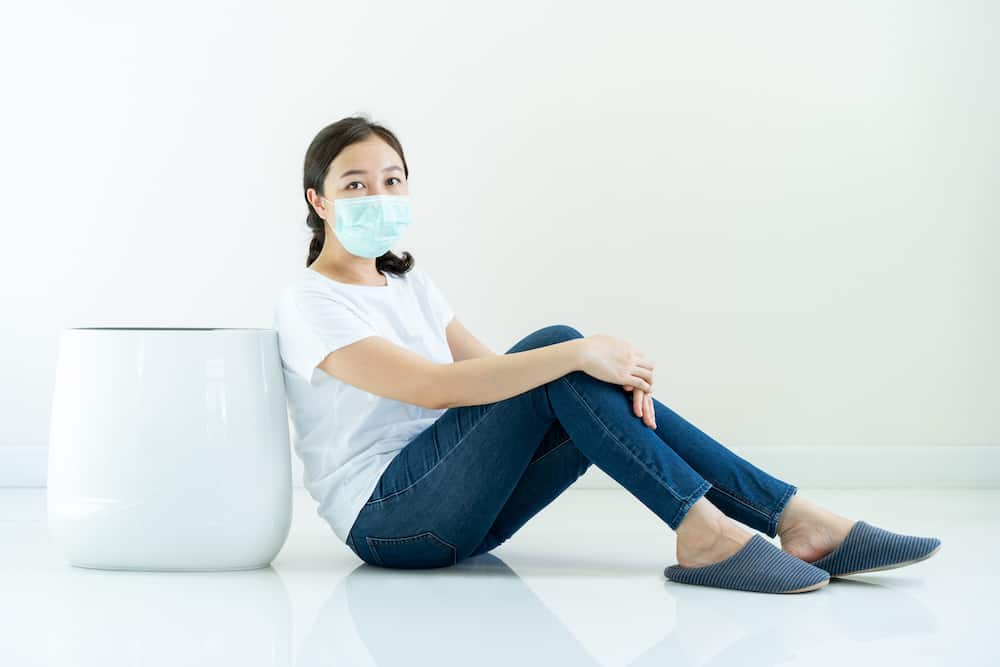
As the pandemic hit across the world, finding methods to prevent the spread of this novel coronavirus has been a primary concern amongst many.
So far, scientists have established that this is an airborne virus.
In that case, do air purifiers work for COVID-19? Or, do we just throw ours out of the window?
Does COVID-19 Live in the Air?
We still don’t know if the virus is affected by heat, humidity, or sunlight.
However, we can easily assume that that is not the case, as there are hundreds of patients in both European and Asian countries.
What we are sure of is the virus’ ability to live in the air.
A recent study in 2020 showed that the COVID-19 virus could spread through the air, water, contaminated surfaces, and fomites.
The covid virus can travel through the air in three ways:
- Larger Respiratory Droplets
The coronavirus primarily and most heavily spreads via an infected person’s mucus.
When we sneeze or cough, large droplets often come out of our mouth and nose, right?
If a person has COVID, this is one of the major ways they distribute the virus.
- Smaller Respiratory Aerosols
Aerosols are very small particles of water. You will often see the term respiratory droplet used to describe these.
Basically, they are particles of ≤5 microns in diameter that come out of our mouth with every exhale.
Coronavirus is smaller than 5 microns, so it can hop on these particles.
- Airborne
According to the newest medical journal, COVID is now suspected to be airborne.
This mode of transmission is super-fast and contagious.
There were even reports that COVID is known to travel as far as 16 kilometers from the source of infection, consequently increasing the necessity of stricter prevention.
How Long Does COVID-19 Remain in the Air For?
Research done in a contained environment shows that regardless of the humidity, the COVID-19 virus can live in the air for up to three hours.
The infection rate does not reduce during this time.
This means that if a patient were to sneeze or cough in the room you are in, the virus can affect you even if you enter the room after the patient has left.
It is a frightening prospect. We can never know who is a potential spreader.
To be safe, it is generally advised to take as many precautions as you can.
Adding supplementary preventive measures can go a long way if used properly.
As part of the precaution against the COVID-19 virus, some suggest using air purifiers at home and at the office.
Professionals, like dental surgeons and maxillofacial surgeons, have been using these to prevent COVID spread.
Do Air Purifiers Work for COVID?
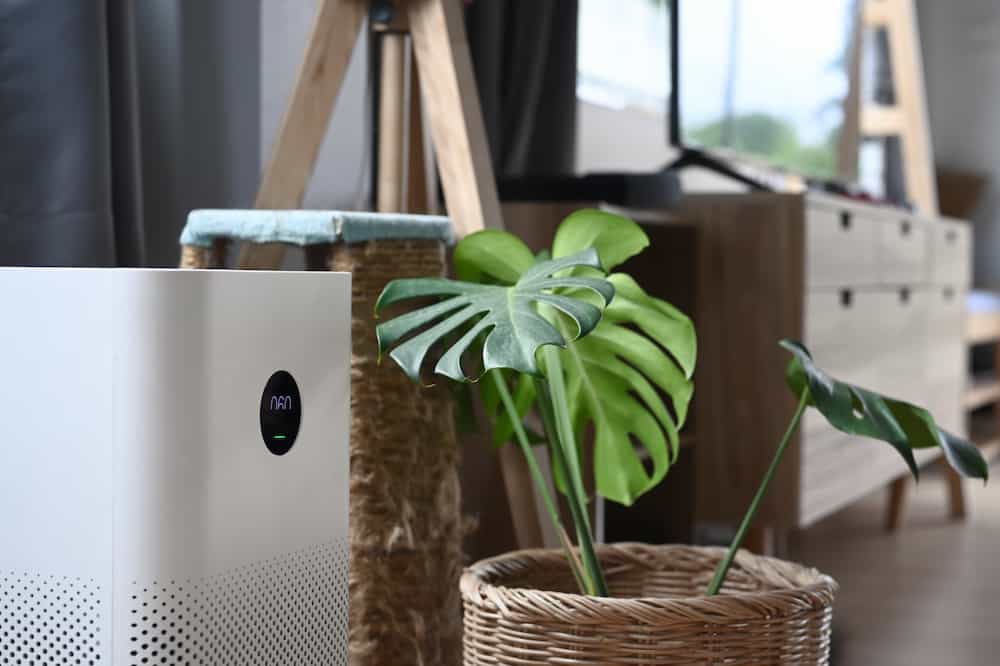
It has been proven that using an air purifier effectively reduces exposure to aerosol significantly.
A strategically placed air purifier has been found to reduce 80% to 95% of COVID-19 air droplets.
Air purifiers work by filtering out the air and recirculating the filtered air through the room.
The mechanism is very similar to how we breathe through masks.
Air purifiers use filters to capture large and small particles when air passes through them.
Depending on the filters, small and nanoparticles can be trapped, but it’s not an absolute defense.
Still, using an air ventilation method is an excellent supplementary measure.
A ventilation rate of at least 288 cubic meters per hour per person is recommended by the World Health Organization to prevent the spread of infectious diseases like COVID.
Will a HEPA Filter Kill COVID-19?
Air purifiers using HEPA filters have shown better accuracy when it comes to the coronavirus.
The COVID-19 virus is usually ultra-small, having only an RNA and a covering that protects it from the environment.
The size of the virus ranges from submicron (0.25 to 1.0 μm) and supermicron (>2.5 μm).
HEPA filters or High-efficiency Particulate Arresting filters force air through an ultra-fine mesh.
NASA scientists claim that HEPA filters capture even the smallest particles of 0.25 to 1 microns.
The COVID virus is often larger than 0.25 micron, so it gets trapped in the filter.
Once trapped, the virus cannot escape easily.
Will an Air Purifier Help Protect Me From COVID-19 in My Home?
Air purifiers are of various types and capacities.
The United States Environmental Protection Agency says that air purifiers are a worthwhile supplement to indoor COVID-19 protection.
Choosing the right one for your home or office is important. It is also equally important to know where and how to use it.
Here are a few tips on how to use an air purifier correctly:
- Use an air purifier for a single room at a time.
Most portable air purifiers have a limited capacity.
For the air purifying process to be effective, minimize the area (room size) and maximize the capacity of the air purifier.
If your room is a bit large, you may want to check the best air purifiers for large rooms.
- When buying, remember to check the filter type.
Do air purifiers work for covid? It depends a lot on the filter type.
Make sure you choose an air purifier with the highest grade HEPA filter so that all virus particles get filtered out from the air.
- Try to use a higher fan speed along with a longer run time.
This is simple math. The more you filter the same air, the more virus particles will be trapped.
- Remember, air purifiers are also great for removing dust and molds.
It’s always a great idea to keep your lungs clear of any potential pathogens, even those non-COVID ones.
Conclusion
Owing to its small size and virulence, the SARS-CoV-2 can travel through the air with ease, contaminating a new host at every chance.
This property of the virus has led to many questions and suggestions.
A major one being this: Why don’t we try eliminating the virus from the air via air purifiers?
With the right kind of air purifier, you can keep your family safe during these troubling times.
The key is to ensure the machine you invest in has a medical-grade HEPA filter to filter out all viruses and allergens.