
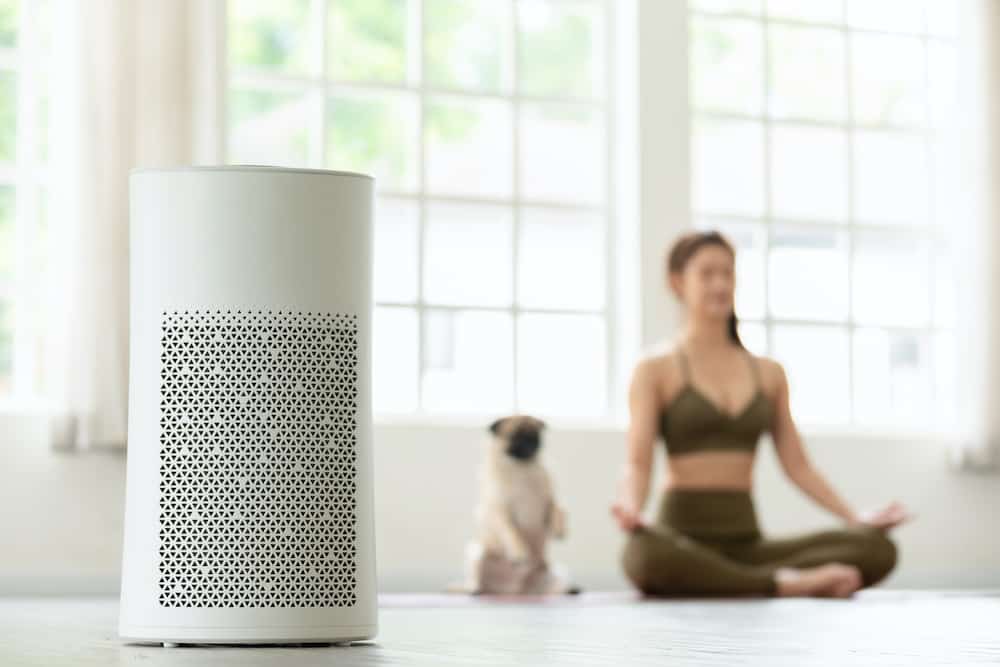
Choosing between an air purifier vs dehumidifiers is more straightforward than expected since they are designed for two distinct tasks.
Air purifiers are a phenomenal resource for improving air quality regarding contaminants, while dehumidifiers manage moisture.
It’s easy to note the differences between the two; however, your home could require both.
What Is an Air Purifier?
Like its name suggests, these appliances are specifically designed to purify the air in a room or your entire home.
They are available in an assortment of sizes, which is important to consider depending on the square footage you need to be purified.
With an air purifier, you should be able to get rid of most allergens and contaminants in your air, reducing respiratory discomfort.
Most purifiers are useful for collecting dust, dander, pollen, and other allergens.
However, you can also find units designed primarily to eliminate odors, such as tobacco smoke, food smells, and pet odor.
It’s known that purifiers that focus primarily on odor reduction are less useful for removing allergens and vice versa.
The Types of Air Purifiers
When you begin shopping, you’ll notice different air purifier or dehumidifier models on the market.
These include UV, HEPA, ionic, central cleaners, and activated carbon.
UV Air Purifiers
Ultraviolet air purifiers are most useful for reducing bacteria, viruses, and other pathogens in your house.
They were initially designed to be used in hospitals and have since become a popular choice for households.
Inside of the purifier, you’ll find a particular UV bulb that disinfects your room by destroying pathogens with ultraviolet light.
When UV light touches contaminants, it breaks down the molecular bonds in their DNA, which successfully eradicates them.
UV air purifiers can also be beneficial for dealing with mold and mildew by destroying the spores.
HEPA Air Purifiers
HEPA purifiers are one of the most common to find in a home since they can reduce smaller contaminants.
You can use most of these filters to eliminate allergens as small as 0.2 microns, such as dander, pollen, mold, and dust.
Although they are highly effective, they require plenty of maintenance in regards to maintaining their filter quality.
Over time, you will need to clean or replace the HEPA filter to keep it working at its best.
It’s also important to note that these devices don’t trap contaminants smaller than 0.2 microns, such as viruses and bacteria.
Central Air Purifiers
If you need a whole-house solution that doesn’t involve buying individual purifiers for every room, central devices are ideal.
With the help of an HVAC professional, central air purifiers can be connected to your cooling and heating systems.
The filters trap up to 99% of pollen, 98% of dust, and 94% of viruses while working with your ducts.
You’ll also find that central air purifiers are essential for protecting the integrity of your heater and air conditioning unit.
Since they’re effective at filtering out contaminants, harmful particles are kept away from the delicate components of your heating and cooling equipment.
Activated Carbon Air Purifiers
Another popular option for in-home use is activated carbon in your air purifier.
Instead of warding off pollutants such as dust and pollen, these units are often preferred for dealing with unappealing odors.
For example, if you have pets, you might want to consider investing in an activated carbon air purifier.
These devices typically have a sheet of activated carbon on the inside, removing smells from the air.
Once the odor is removed, clean and fresh air is pushed back out into your home.
Although they aren’t effective at dealing with allergens, they can collect small amounts of dust over time.
What Is a Dehumidifier?
High levels of humidity are not only uncomfortable but can also be disastrous to the integrity of your home.
If you live in a southern region, such as states like Louisiana and Texas, you’re well aware of the effects of excessive moisture.
Using a dehumidifier vs air purifier, you can manage the moisture level in your home, which could be causing health detriments.
Too much humidity can cause the human body to feel like it’s hotter than it is, as sweat doesn’t evaporate as it should.
Considering sweat is how we manage our body temperature, too much humidity can be uncomfortable and dangerous.
Also, increased relative humidity can encourage the production of pests, mold, and respiratory illnesses.
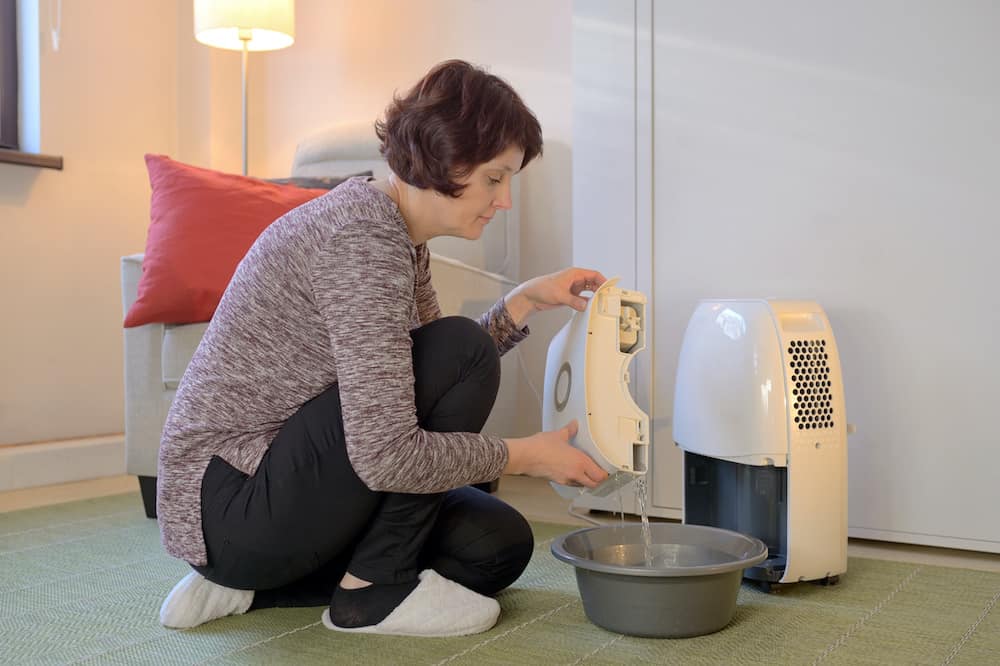
The primary objective of a dehumidifier is to allow homeowners to manage their indoor moisture effectively.
By doing so, you can ensure the water in the air is between 45% and 50%, as recommended by the EPA.
Otherwise, you could experience health and home effects such as:
- Worsened allergies
- High blood pressure
- Uncomfortably sleep
- Heat exhaustion
- Headaches
- Increased dust mites
- Thriving pests and insects
- Peeling wallpaper and paint
- Mold and mildew
The Types of Dehumidifiers
A dehumidifier and an air purifier both have different types of technology they use for optimal in-home performance.
These include heat pumps, ventilators, and chemical absorbent models.
Heat Pump Dehumidifiers
In a heat pump model, you’ll find heat exchange coils, a heat pump, as well as a fan.
The fan’s job is to push air through the exchange coils designed to stay extremely cold.
As the warm air is brought to the coils, it condenses and is then collected by the dehumidifier.
Once an adequate amount of moisture is removed, dry air is pushed back out into the room.
Dehumidifying Ventilators
If you own a home with a basement or attic, it’s likely your HVAC technician has discussed dehumidifying ventilators.
These devices are essential for homes that are prone to excessive amounts of moisture naturally.
A ventilator consists of an exhaust fan, used to push air outside rather than keep it in the home.
All it does is continually push overly humidified air to maintain a more comfortable interior environment.
Chemical Absorbent Dehumidifiers
You might find these types are often referred to as desiccant dehumidifiers and are often one of the more expensive options.
They also require a lot of maintenance since you have to purchase unique moisture-absorbing cartridges.
Absorbent powders and gels are inserted into the cartridges, which then go into the dehumidifier.
As moisturized air enters the unit, the cartridges absorb the water, and then it pushes out dehumidified air.
Air Purifier vs Dehumidifier FAQs
1. What’s the difference between a dehumidifier and air purifier?
At their core, both of these appliances are designed to do very different tasks.
Instead of focusing on reducing air contaminants, dehumidifiers work to reduce moisture in the air.
Alternatively, air purifiers have nothing to do with humidity levels and instead focus solely on reducing allergens.
Both appliances can be highly useful in any home, especially if you’ve experienced a buildup of dust and respiratory irritants.
Dehumidifiers are highly recommended for homes with high natural levels of humidity, which can be hazardous to your health.
2. Can you use a dehumidifier and air purifier in the same room?
It’s possible to use a dehumidifier and an air purifier in the same room to do two jobs at once.
The most important thing to consider when using an air purifier or dehumidifier is to ensure they’re placed a few feet apart.
Otherwise, they’ll both be competing for air to take in and purify or dehumidify.
Since they are both designed to do two very different tasks, pairing them together can significantly improve your home’s air quality.
3. Do dehumidifiers help clean the air?
In a way, dehumidifiers can be useful for adding an extra touch when cleaning the air in your home.
Dehumidifiers can help reduce the likelihood of contaminants thriving in your home by managing relative humidity.
Irritants such as mold and mildew are known to thrive in wet environments, which is where this appliance proves most useful.
You’ll also find that too much moisture can be a good breeding ground for viruses to be easily transmitted from one person to another.
However, a dehumidifier cannot replace the air purifier’s work, as purification isn’t its primary job.
Instead of deciding between a dehumidifier vs air purifier, we recommend investing in both.
4. Can I make a dehumidifier?
Making your dehumidifier can be cost-effective and straightforward, especially if you need a short-term solution.
Several methods, such as using charcoal briquettes and road salt in a container, help absorb moisture.
Although homemade methods aren’t as reliable as buying a dehumidifier and an air purifier, they can be immediate solutions.
Which Is Better Air Purifier or Dehumidifier?
Choosing between an air purifier vs dehumidifiers is simple as one cleans the air while the other removes moisture.
Deciding to buy both a dehumidifier and air purifier is an excellent solution to reducing allergens and contaminants while also adding comfort.
Not to mention that having both devices gives you year-round comfort.